


Expert Secondhand Car Inspection at Uppal

Uppal has quietly become one of Hyderabad’s busiest pockets for used car deals. Between the growing residential population, easy access to the outer ring road, and a steady stream of people upgrading vehicles as their families or jobs change, there’s no shortage of secondhand cars changing hands here every week. Which also means there’s no shortage of buyers finding out, a few weeks too late, that the car they bought wasn’t quite what it seemed.
Most of these situations aren’t the result of buyers being careless. They’re the result of a handful of very specific, very avoidable mistakes that repeat themselves over and over across different buyers, different cars, and different dealerships. Let’s go through them one at a time, because once you see the pattern, it becomes almost impossible to fall into it yourself.
Mistake 1: Trusting the Test Drive as the Final Word
This is the big one. A test drive is genuinely useful, it tells you how a car handles, how it accelerates, whether anything feels obviously off. What it doesn’t tell you is how the engine performs after forty minutes of continuous driving, how the brakes hold up on a long downhill stretch, or whether a slightly delayed gear shift is nothing or the early sign of a transmission problem building up.
Sellers understand this better than buyers usually do. A car can behave perfectly well for a fifteen-minute loop and still be carrying issues that only surface under sustained use. This is exactly why a structured, proper car inspection in Uppal matters so much more than a short drive around the block. It’s designed to catch what a test drive physically cannot.
Mistake 2: Skipping the Paperwork Because “It Looks Fine”
Visual inspection gets all the attention, but paperwork mistakes are often the costliest ones. Buyers regularly skip verifying that the chassis and engine numbers on the car actually match the RC book, assuming that if the seller has documents in hand, everything must be in order. It often isn’t.
A mismatched number can point to a rebuilt vehicle with a murky history. An insurance record loaded with past claims tells you the car has likely seen more damage than the seller is mentioning out loud. And a loan that hasn’t been fully cleared on the previous owner’s end can leave you dealing with a legal headache long after the sale is done. None of this requires expert knowledge to catch, just the discipline to actually check instead of assuming.
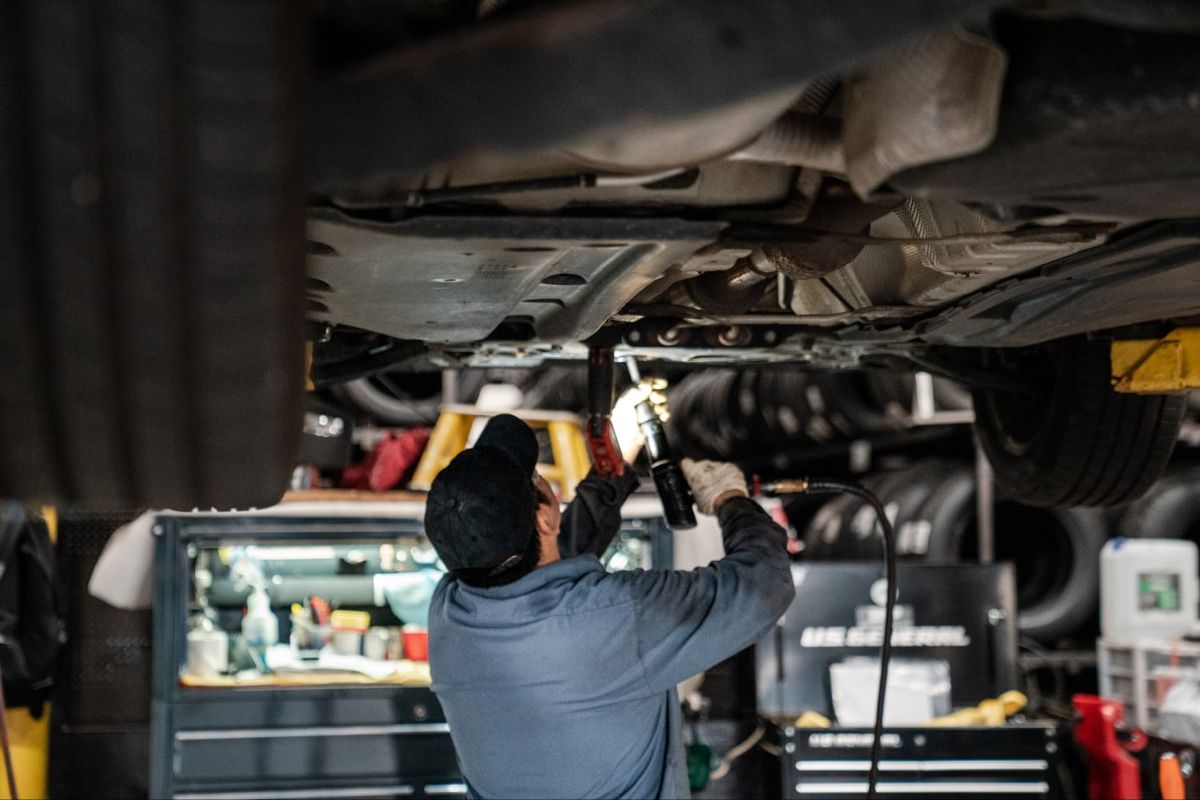
Mistake 3: Assuming a Clean Exterior Means a Clean History
This is where a lot of buyers get fooled, understandably so. A fresh coat of paint, a thorough interior clean, and new floor mats can make almost any car look like it just rolled out of a showroom. None of that tells you anything about what’s happening mechanically underneath.
A paint thickness gauge, something most buyers don’t own and wouldn’t think to use, can reveal panels that have been repainted after accident repair, something invisible to the naked eye. Uneven gaps between body panels, subtle enough to miss on a casual look, often point to the same thing. This is precisely the kind of detail a proper secondhand car inspection is built to catch, because it looks past the surface rather than being reassured by it.
Mistake 4: Not Checking How the Car Was Actually Used
Every used car has a story, but sellers tend to tell the flattering version. “Only driven to the office and back” sounds reassuring, but it doesn’t tell you whether that office commute involved rough roads, whether the car sat in flooded streets during monsoon season, or whether it was driven aggressively by a second family member who never comes up in conversation.
Service history records, when they exist, tell a more honest story than anything the seller says out loud. Consistent, documented servicing at regular intervals is one of the strongest signs of a well cared-for car. Gaps, inconsistencies, or a complete absence of records should raise questions, not get waved away with a reassuring smile.
Mistake 5: Treating Inspection as an Unnecessary Expense
This mistake is purely about mindset, and it’s probably the most damaging one on this list. A proper inspection typically costs a small fraction of what a single major repair would run. A clutch job, a transmission repair, a head gasket replacement, any one of these can cost tens of thousands of rupees. An inspection, by comparison, often costs less than a tank of fuel.
Buyers who skip inspection to “save money” are almost always making the math worse for themselves, not better. The inspection isn’t the expense. The problems it would have caught are the expense, they just show up later, usually with worse timing and a bigger bill attached.
Mistake 6: Relying on a Mechanic Friend Instead of a Structured Process
There’s nothing wrong with having a mechanic friend look at a car as a second opinion, but relying on that alone often creates a false sense of thoroughness. A general mechanic doing a favor, without diagnostic tools or a structured checklist, is working from experience and instinct rather than process. That’s genuinely useful for known problems, but far less reliable for catching hidden electronic faults, subtle chassis irregularities, or paperwork discrepancies.
A proper inspection service runs through every system methodically: engine, transmission, suspension, brakes, electricals, and an OBD diagnostic scan that pulls fault codes directly from the car’s onboard computer. It’s not about the mechanic’s skill level, it’s about having a repeatable process that doesn’t depend on catching things by chance.
Mistake 7: Forgetting That the Relationship With the Car Doesn’t End at Purchase
Buyers spend so much energy on the inspection before purchase that they sometimes forget the car still needs regular attention afterward. A well-bought car can become a poorly-maintained one just as easily as a poorly-bought car becomes a money pit, if routine car service gets ignored once the excitement of the purchase wears off.
Scheduled maintenance, oil changes, brake checks, periodic servicing, is what keeps a good buying decision staying a good decision for years. Treating service as something to think about only when a warning light comes on almost always means dealing with a bigger, more expensive car repair than if the issue had been caught early.
How Go Clutch Helps Uppal Buyers Avoid All Seven
Every mistake on this list has the same underlying fix: replace guesswork and assumption with an actual structured process, run by someone with no stake in whether the deal closes. That’s essentially what Go Clutch offers.
Go Clutch operates as an online car service platform designed to give buyers and owners across Uppal exactly this kind of independent, professional access to inspection, servicing, and repair. Booking happens entirely online, no waiting around a workshop hoping someone eventually gets to your car. Inspection findings come back as detailed digital reports, not a vague verbal summary that’s easy to forget or misremember later. Pickup and drop options mean the whole process fits your schedule instead of forcing you to rearrange your day around a garage visit. And because pricing is laid out upfront, there’s no unpleasant surprise waiting at the end.
For pre-purchase decisions specifically, running a Go Clutch inspection before finalizing anything addresses mistakes one through six almost entirely, giving you a clear, documented picture of the car’s real condition rather than relying on how convincing the seller sounds. And for the seventh mistake, the one about ongoing neglect after purchase, the same platform covers routine car service and repairs, meaning the same standard of honesty and thoroughness continues well past the day you drive the car home.
What to Actually Do With This List
Reading about mistakes is useful, but the real value comes from applying it the next time you’re standing in front of a used car in Uppal, paperwork in one hand, seller talking up the car’s virtues in the other ear. Before anything gets signed, verify the documents yourself rather than assuming they’re fine. Book a proper inspection instead of relying on a quick look or a favor from a friend. Ask for service history and actually read through it. And once the deal is done, don’t let routine maintenance slide just because the excitement of ownership has settled into everyday routine.
None of this requires becoming a car expert overnight. It just requires treating inspection and ongoing service as a normal, non-negotiable part of car ownership rather than an optional extra you can skip when you’re in a hurry.
A Quick Look at What a Full Inspection Actually Checks
It helps to know exactly what you’re paying for when you book one of these. A thorough inspection typically walks through the engine bay first, checking for oil leaks, coolant leaks, unusual noises, and general wear that should roughly match the claimed mileage. From there it moves to the transmission, tested under real load conditions rather than idling in a driveway, since gearbox issues rarely show themselves at a standstill.
Suspension and steering come next, evaluated specifically against rougher road conditions rather than smooth showroom tarmac, because a car that feels perfectly composed on flat asphalt can behave very differently the moment potholes get involved. Brakes and tyres get measured rather than eyeballed, tread depth and pad thickness are exact numbers, not impressions. Electrical systems, from power windows to the infotainment unit, get tested individually, since a single failed component can sometimes mask several smaller issues at once.
Then comes the underbody and chassis check, looking for rust, frame damage, or structural irregularities that point toward a past accident. And finally, an OBD diagnostic scan pulls stored fault codes directly from the car’s onboard computer, catching electronic issues that would otherwise stay completely invisible until they suddenly aren’t.
Put together, this is a genuinely comprehensive picture of the car’s real condition, not a five-minute glance dressed up as due diligence.
Why Uppal’s Growing Market Makes This Even More Relevant
As Uppal continues to develop, with more residential complexes, better connectivity, and a growing number of people relocating here for work, the used car market has grown right alongside it. More sellers means more variety and often better prices for buyers willing to look around. It also means more competition among sellers to make their listings stand out, which occasionally translates into cars being presented a little more favorably than their actual condition warrants.
This isn’t a reason to avoid buying used in Uppal, the opposite, really. It’s a reason to make inspection a standard part of the process rather than an optional extra. In a market this active, the buyers who consistently walk away with genuinely good deals are the ones who verify before they commit, not the ones who trust the shiniest listing photos.
Conclusion
The used car market in Uppal has plenty of genuinely good vehicles in it, cars that have been well maintained by owners who took proper care of them. The problem has never been a shortage of good cars. It’s that a good car and a well-disguised problematic one can look nearly identical from the outside, right up until the moment they don’t.
A proper inspection is what separates the two, reliably, before you’ve committed any money. It costs a small fraction of what getting it wrong would, takes far less time than most buyers assume, and increasingly, thanks to platforms like Go Clutch, doesn’t even require leaving your house to book. The next time you’re close to finalizing a used car purchase in Uppal, skip the mistakes on this list. Book the inspection, read the report, then decide.