


Maruti Car Service Expert at Uppal

Every week, the team at Goclutch fields the same handful of questions from Maruti owners — some worried about strange noises, some just trying to understand what they’re paying for, and some who’ve been burned before by a garage that didn’t explain much. Rather than another generic overview, this post answers those actual questions, the way they come up in real conversations.
“How Often Does My Maruti Really Need a Service?”
This is the most common question, and the honest answer is: it depends on your car and how you drive it, but there are solid general guidelines.
Most Maruti models — Swift, Baleno, Dzire, Brezza, Ertiga — follow a recommended interval of roughly every 10,000 km or 6 months, whichever comes first. But if you’re doing a lot of stop-and-go city driving around Uppal, with constant idling in traffic, your engine oil and filters may wear out faster than that schedule assumes. A good maruti car service center will actually ask about your driving habits before recommending an interval, rather than applying the same blanket rule to everyone.
My Car Feels Fine — Why Should I Pay for Service?
This comes up constantly, and it’s understandable. If nothing feels wrong, spending money on car service can feel unnecessary. But a lot of engine wear is invisible until it isn’t.
Think of it like this: oil doesn’t announce when it’s lost its lubricating properties. Brake pads don’t beep when they’re down to their last few millimeters. These things degrade quietly, and by the time you notice a problem — a grinding noise, a warning light, reduced power — the underlying issue has often been building for weeks or months. Regular car service is essentially about catching things before they become noticeable, which is exactly when they’re cheapest and easiest to fix.
What’s the Difference Between a Regular Garage and a Specialist Like Gocluth?
Fair question, and it deserves a direct answer rather than marketing fluff.
A regular garage can usually handle basic maintenance competently — oil changes, tire work, simple part swaps. Where the gap shows up is in diagnosis. Maruti’s K-series and Fiat-sourced diesel engines, along with the electronic systems managing fuel injection and emissions, have specific quirks and known failure patterns. Technicians who work primarily with Maruti vehicles recognize these patterns quickly. A generalist mechanic, seeing the same fault code, might replace parts through trial and error — which costs you more in both time and money.
That’s really the core value of a dedicated maruti car service provider: fewer wrong guesses, faster accurate fixes, and a lower total cost of ownership over the life of the car.
Are Genuine Parts Really Worth the Extra Cost?
Almost always, yes — and here’s the reasoning rather than just the claim.
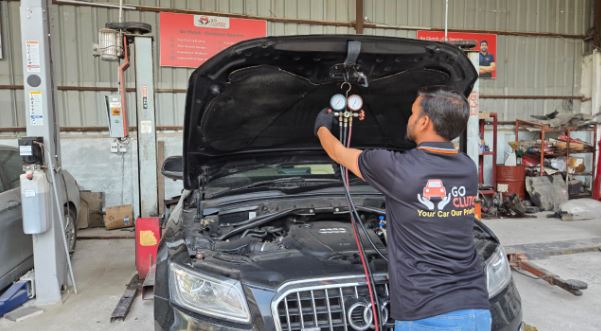
Genuine and manufacturer-approved parts are built to exact tolerances matching your specific engine and chassis. Cheaper aftermarket alternatives often cut corners on material quality or precision, which might not matter for the first few months but shows up as premature wear later. A brake pad that’s slightly off-spec might wear down in half the expected time, or worse, wear unevenly and damage your rotor. What looked like a saving upfront turns into a bigger car repair bill down the line.
Goclutch sources parts that match Maruti’s specifications specifically because the short-term savings on cheaper parts rarely hold up over the vehicle’s lifespan.
Why Should I Choose a Workshop in Uppal Instead of Somewhere Bigger in the City?
This one comes up a lot from newer residents who assume a flashier, more central workshop must be better.
In practice, proximity matters more than people expect. If your car needs a follow-up check, or something feels slightly off a few days after a repair, a nearby workshop means you’ll actually go back and get it looked at. A workshop 40 minutes away, buried in city traffic, often means people just live with a problem instead of dealing with it.
A reliable car service in uppal option also means technicians see your car repeatedly over time, building familiarity with its specific history — something a one-off visit to a distant garage can’t replicate.
What Does a Proper Service Visit Actually Include?
This varies slightly by package, but a thorough visit at Go clutch typically covers:
- Engine oil and filter replacement, matched to manufacturer specifications
- Brake inspection, including pad thickness and fluid condition
- Battery health check, especially important before summer and winter extremes
- Coolant level and condition check
- Tire pressure, tread wear, and rotation if needed
- A diagnostic scan for stored fault codes, even if no warning light is currently showing
- A test drive to confirm everything performs as expected, not just that a light turned off
None of this is glamorous work, but it’s the difference between a car that quietly runs well for over a decade and one that starts causing problems by year five or six.
My Check Engine Light Came On — Is That Serious?
Sometimes yes, sometimes no — which is exactly why guessing is a bad idea. A check engine light can mean anything from a loose fuel cap to a failing oxygen sensor to a more serious fuel injection issue. Driving around with it ignored, hoping it resolves itself, is a gamble that occasionally pays off but often doesn’t.
The right move is a proper diagnostic scan, which takes a matter of minutes at a shop equipped with the right tools. This single step turns a stressful guessing game into a clear, actionable next step — and it’s standard practice for any car repair visit at Goclutch, regardless of how minor the issue might seem.
How Do I Know I’m Not Being Overcharged?
This is a legitimate concern, and honestly one of the biggest reasons people avoid getting their car serviced regularly in the first place — a bad experience with unclear billing sticks with you.
The best defense is transparency before work begins, not after. A trustworthy car service center will walk you through what’s being checked, show you worn parts if something’s being replaced, and give a clear estimate before starting — not a surprise bill at pickup. If a workshop is vague about pricing upfront or reluctant to explain what a charge is for, that’s worth noticing.
Is It Worth Keeping a Service History?
Absolutely, and for two solid reasons. First, it makes every future visit faster and more accurate, since technicians can reference exactly what’s been done and when. Second, it directly affects resale value — a Maruti with a clean, documented maintenance record is simply more attractive to buyers than one with unknown history and gaps in maintenance.
Goclutch keeps digital service records for returning customers specifically because this continuity benefits everyone — the car, the owner, and eventually, if it comes to that, the next buyer.
Conclusion
Most of these questions boil down to the same underlying concern: trust. People want to know their car is actually being looked after properly, not just being run through a checklist for the sake of a bill. That’s the standard Goclutch has built its name on for Maruti owners around Uppal — clear answers, honest car repair recommendations, and maruti car service that treats your questions as worth answering properly, not brushing past.
If you’ve got a Maruti and a question that’s been nagging at you, there’s a good chance someone’s already asked it — and there’s an honest answer waiting for you.